
Best Supplier Negotiation Strategies
A Professional Guide to Reducing Costs and Achieving the Best Value
Supplier negotiation is one of the most important skills that directly impacts procurement success. Successful negotiations aim not only to get a lower price but to build a long-term relationship that delivers real value to both parties and ensures supply stability and product and service quality.
Successful organizations use negotiation as a strategic tool to improve operational performance, reduce costs, minimize risks, and enhance supplier collaboration.
Why Supplier Negotiation Matters
Professional negotiation helps reduce procurement costs, improve product quality, reduce delivery time, obtain flexible payment terms, improve warranty and after-sales service, build long-term partnerships, and reduce operational risks.
Before You Start Negotiating
Do not start any negotiation meeting before gathering: market average prices, number of competing suppliers, supplier production capacity, delivery commitment record, product quality, warranty terms, transportation cost, delivery time, and ability to supply additional quantities. The more information you have, the stronger your negotiation position.
Key Negotiation Strategies
1. Don't Make Price the Only Goal
Instead of focusing only on price, negotiate on payment terms, free shipping, warranty, training, installation, maintenance, delivery speed, and future discounts. Often these terms are more valuable than a small price discount.
2. Use Multiple Suppliers
Having more than one supplier gives you stronger negotiating power and reduces reliance on a single source.
3. Request Multiple RFQs
Sending RFQs to multiple suppliers helps compare price, quality, services, execution time, and payment terms.
4. Don't Reveal Your Budget Early
A common mistake is disclosing the budget before knowing the supplier's offer, reducing the chance of getting the best deal.
5. Use Data and Numbers
Rely on indicators like annual purchase volume, expected quantities, market prices, and collaboration history. Numbers strengthen your negotiation position.
6. Focus on Partnership
Successful negotiation builds a long-term relationship rather than achieving a quick one-time gain.
7. Document All Agreements
After negotiation, document prices, specifications, delivery dates, warranty, dispute resolution mechanism, and payment terms.
Mistakes to Avoid
Relying on a single supplier, accepting the first offer without comparison, negotiating without market research, ignoring product quality, not reviewing the contract, and making decisions under time pressure.
Negotiation Success Indicators
Success can be measured by savings percentage achieved, delivery commitment rate, reduced problem incidents, internal department satisfaction, continued supplier relationship, and quality of received products.
How KBK Active Helps
KBK Active follows a professional procurement methodology including market research, RFQ preparation, offer analysis, supplier negotiation, and selecting the most suitable option according to client needs — focusing on achieving the best value, quality, and supply continuity.
Conclusion
Professional negotiation is not a battle between buyer and supplier but a process aimed at building a mutually beneficial relationship. Organizations that rely on data, planning, and supplier evaluation achieve better long-term results compared to focusing only on price.
FAQ
Should I negotiate only on price?
No, you can also negotiate on warranty, payment terms, shipping, maintenance, and delivery conditions.
How do I know if a supplier offers a fair price?
By comparing multiple quotations and analyzing total value, not just price.
Are long-term supplier relationships beneficial?
Yes, they help improve service, facilitate negotiation, and obtain better terms over time.
When should I renegotiate with a supplier?
When renewing contracts, market prices change, purchase volume increases, or new needs arise.
Related Articles
- Learn more about managing supplier contracts
- Learn more about mitigating supply chain risks
- Learn more about measuring supplier performance
Ready to Create Your RFQ?
Use our free RFQ Generator to create professional quotation requests in minutes.
Try RFQ GeneratorRead our complete Supplier Management Guide.
Explore more procurement tools at KBK Active Tools Center.
Put This Knowledge Into Practice
Generate RFQs and evaluate suppliers in minutes with our free online tools
About KBK Active
This article was written by KBK Active, a leading enterprise procurement company in Egypt. With over 12 years of experience serving hotels, restaurants, hospitals, and government sectors, we bring deep expertise to every topic we cover.
Learn More About UsRelated Articles

The Complete Guide to Supplier Management: Building Strong Partnerships
Learn how to effectively manage suppliers through selection, evaluation, negotia…
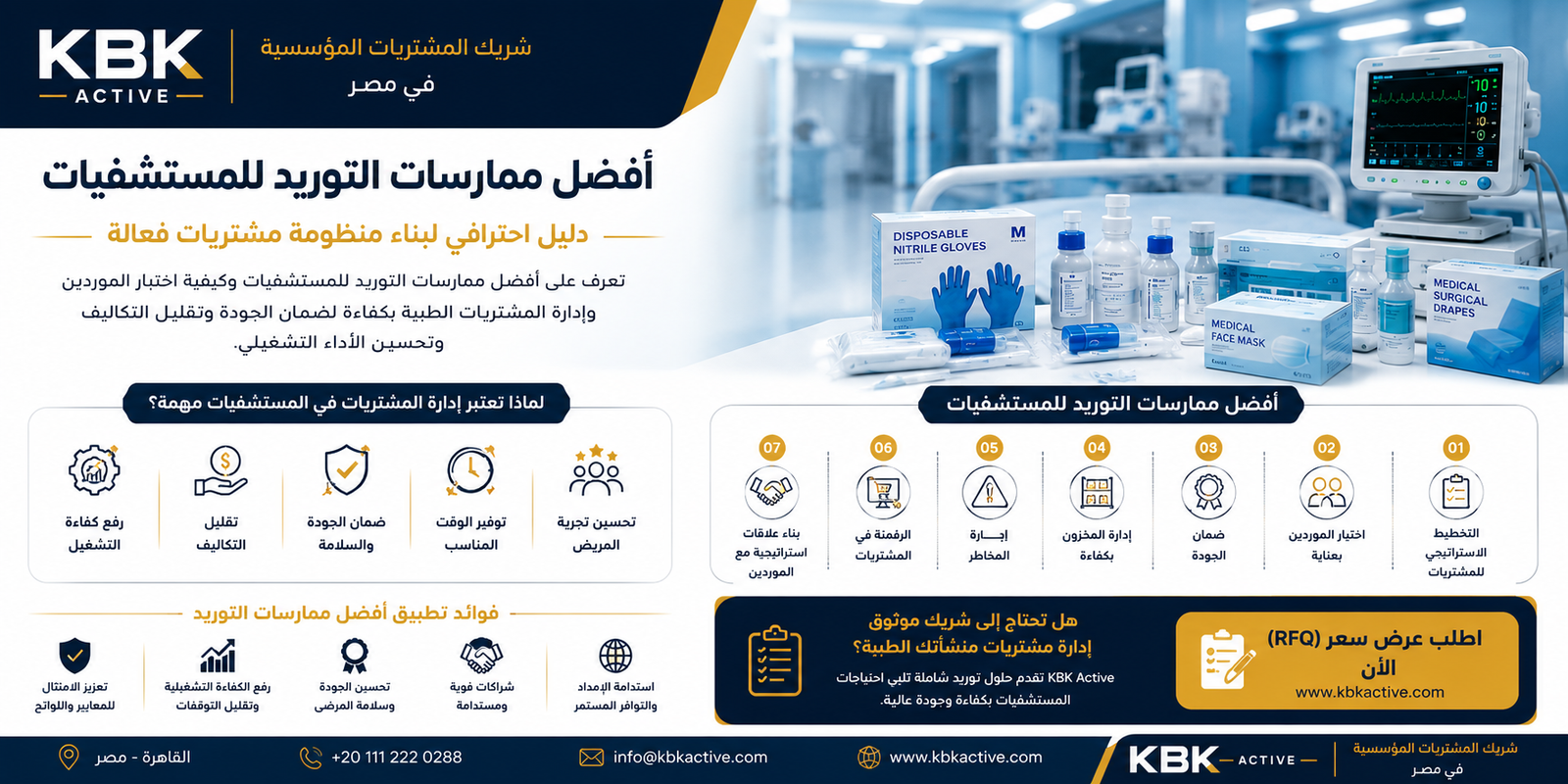
Hospital Procurement Best Practices: A Professional Guide to Medical Supply Mana
Learn the best practices for hospital procurement, how to choose suppliers, and …
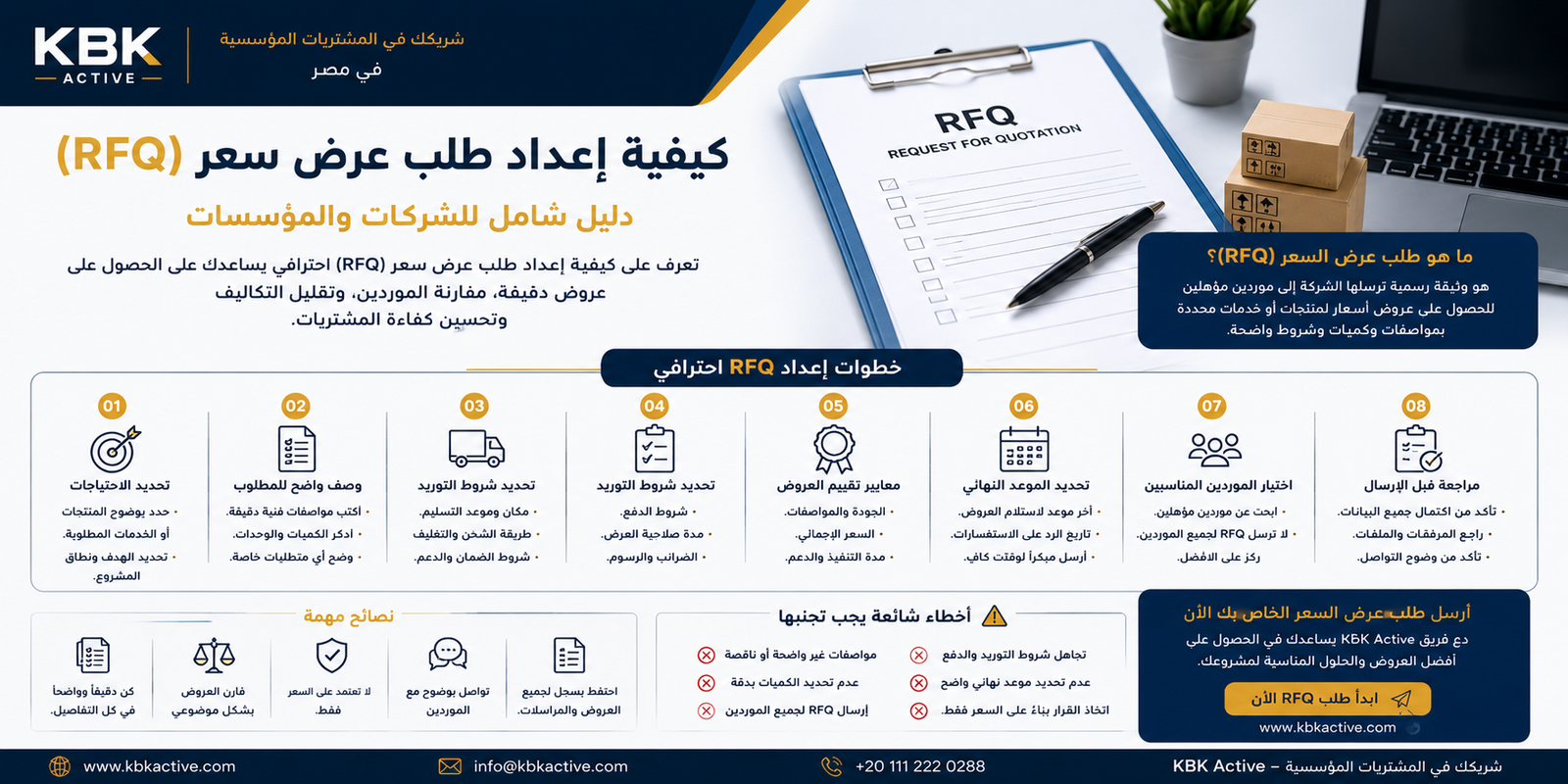
How to Write a Professional RFQ: A Complete Guide for Businesses
Learn how to write a professional Request for Quotation (RFQ) to get accurate bi…
Need expert help with Best Supplier Negotiation Strategies: A Professional Guide to Reducing Costs and Achieving the Best Value? Our team is ready to assist.
KBK Active provides end-to-end procurement solutions for enterprises