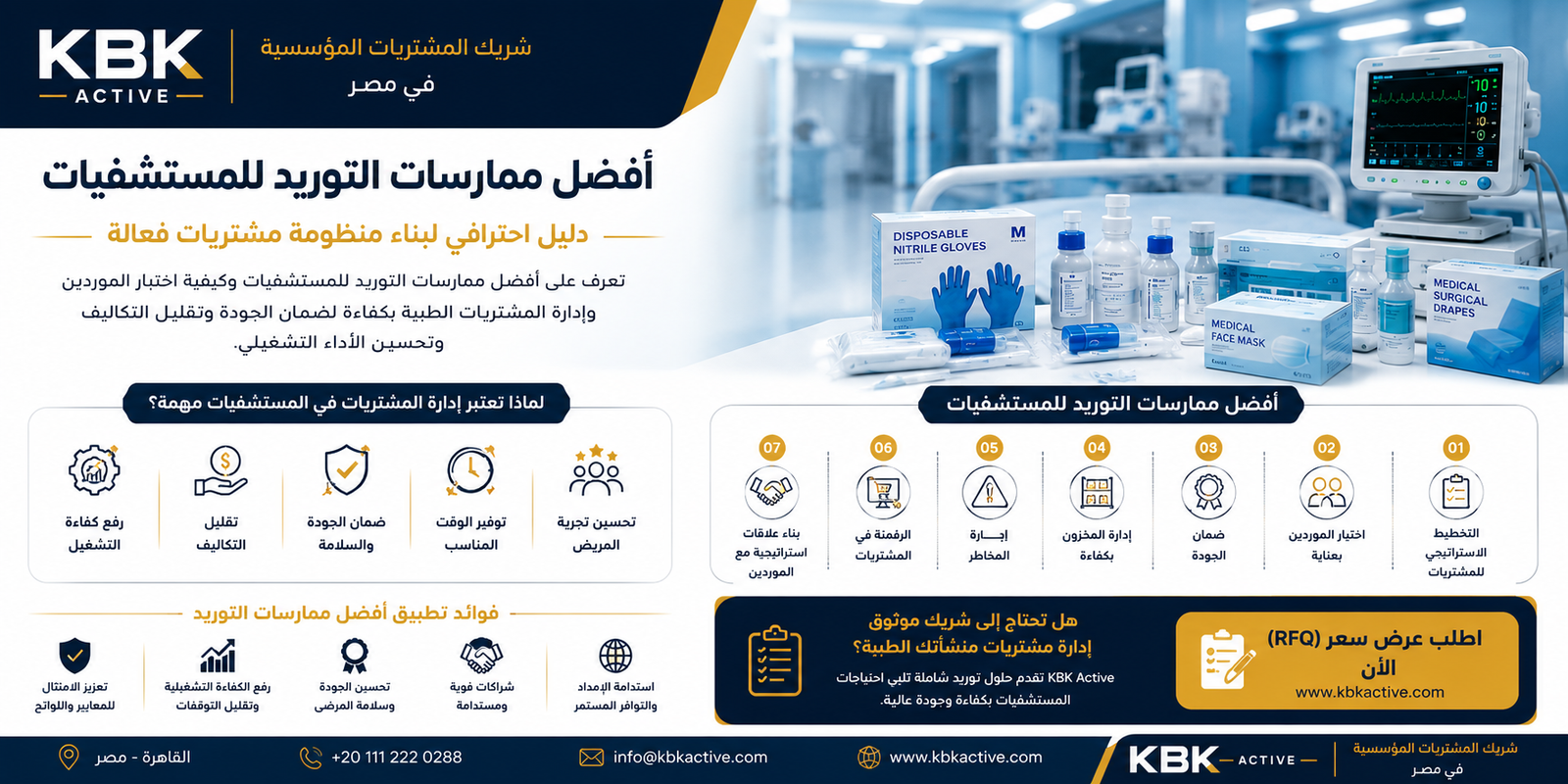
Hospital Procurement Best Practices
A Professional Guide to Building an Effective Procurement System
Hospital procurement management is one of the most impactful aspects of healthcare quality and operational continuity. The success of any medical facility depends not only on medical staff but also on having a professional procurement system that ensures products and supplies are available at the right time, with the required specifications, and according to the highest quality and safety standards.
Hospitals need suppliers who can consistently meet their operational needs while complying with regulations, minimizing risks, and achieving the best value for cost.
The Importance of Procurement Management in Healthcare
Hospital procurement covers many categories, including:
- Medical devices and equipment
- Medical supplies and consumables
- Medical and administrative furniture
- Laboratory equipment
- Sterilization tools
- Cleaning and hygiene supplies
- Consumable materials
- Kitchen and laundry equipment
- Safety and security systems
A professional procurement system contributes to improving healthcare quality, reducing waste, and increasing operational efficiency. For specialized procurement solutions in the healthcare sector, visit our Hospital Procurement page.
First: Strategic Procurement Planning
Successful procurement starts with a clear plan based on:
- Annual needs analysis
- Priority setting
- Accurate budgeting
- Future demand forecasting
- Efficient inventory management
Good planning reduces emergency purchases and prevents shortages of vital supplies.
Second: Careful Supplier Selection
Choosing the right supplier should be based on clear criteria, including:
- Experience in the healthcare sector
- Product quality
- Ability to meet delivery deadlines
- Supply chain stability
- After-sales service
- Emergency response speed
- Professional reputation
Building long-term relationships with trusted suppliers helps stabilize operations and reduce risks. Read our guide on how to choose a procurement company.
Third: Quality Assurance
Quality is essential in healthcare. Therefore, you should:
- Inspect products before acceptance
- Review technical specifications
- Verify packaging integrity
- Match products against agreed requirements
- Document inspection and acceptance processes
Fourth: Efficient Inventory Management
Good inventory management helps:
- Prevent shortages of vital supplies
- Reduce waste
- Improve procurement cycles
- Monitor expiration dates
- Reduce storage costs
Using digital inventory management systems improves data accuracy and decision-making speed.
Fifth: Risk Management
Hospitals should have a plan to deal with:
- Supplier delays
- Supply chain disruptions
- Price increases
- Material shortages
- Emergencies and disasters
Having more than one qualified supplier for each category reduces the impact of these risks.
Sixth: Digitalization in Procurement
Digital systems improve work efficiency through:
- Electronic purchase orders
- Order tracking
- Contract management
- Spend analysis
- Reporting
- Document archiving
- Supplier performance monitoring
Seventh: Building Strategic Supplier Relationships
Instead of dealing with suppliers based on price only, build partnerships based on:
- Trust
- Transparency
- Commitment
- Continuous improvement
- Performance enhancement
- Data and forecast sharing
This approach helps achieve greater supply chain stability.
How KBK Active Can Help
KBK Active offers comprehensive procurement solutions for the healthcare sector by studying each facility's needs, coordinating purchases, selecting appropriate suppliers, monitoring quality, and managing the procurement process through to delivery — with a focus on efficiency, compliance, and quality execution. Explore our healthcare procurement services.
Related Articles
Ready to Optimize Your Hospital Procurement?
Contact KBK Active today for a free consultation and competitive quotation.
Get Your Custom QuoteConclusion
Hospital procurement management is not just a purchasing process — it is a strategic element that affects healthcare quality and operational sustainability. Applying best practices in supplier selection, quality assurance, inventory management, and digitalization helps healthcare organizations improve performance, reduce costs, and achieve the highest levels of reliability.
If your healthcare facility is looking for a specialized partner in procurement solutions, the KBK Active team is ready to study your needs and provide a quotation (RFQ) that suits your project requirements.
Explore more procurement tools at KBK Active Tools Center.
Put This Knowledge Into Practice
Generate RFQs and evaluate suppliers in minutes with our free online tools
About KBK Active
This article was written by KBK Active, a leading enterprise procurement company in Egypt. With over 12 years of experience serving hotels, restaurants, hospitals, and government sectors, we bring deep expertise to every topic we cover.
Learn More About UsRelated Articles
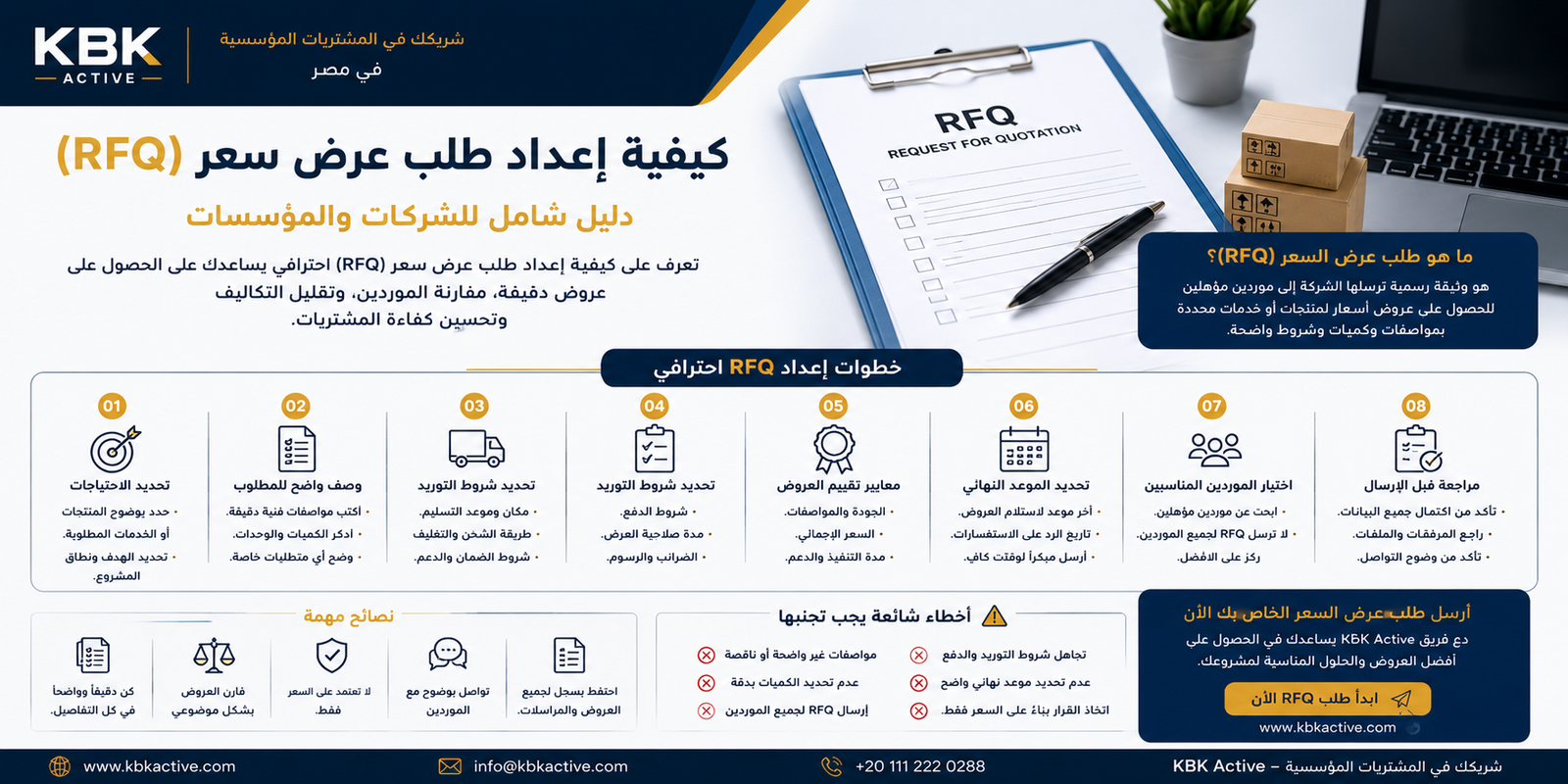
How to Write a Professional RFQ: A Complete Guide for Businesses
Learn how to write a professional Request for Quotation (RFQ) to get accurate bi…

How to Choose a Commercial Location Inside a Fuel Station: A Practical Guide for
Learn the key factors for choosing the best commercial location inside a fuel st…

Complete Hotel Setup Guide: Essential Steps for Opening a Successful Hotel
A comprehensive guide to hotel setup and procurement. Learn the essential steps …
Need expert help with Hospital Procurement Best Practices: A Professional Guide to Medical Supply Management? Our team is ready to assist.
KBK Active provides end-to-end procurement solutions for enterprises