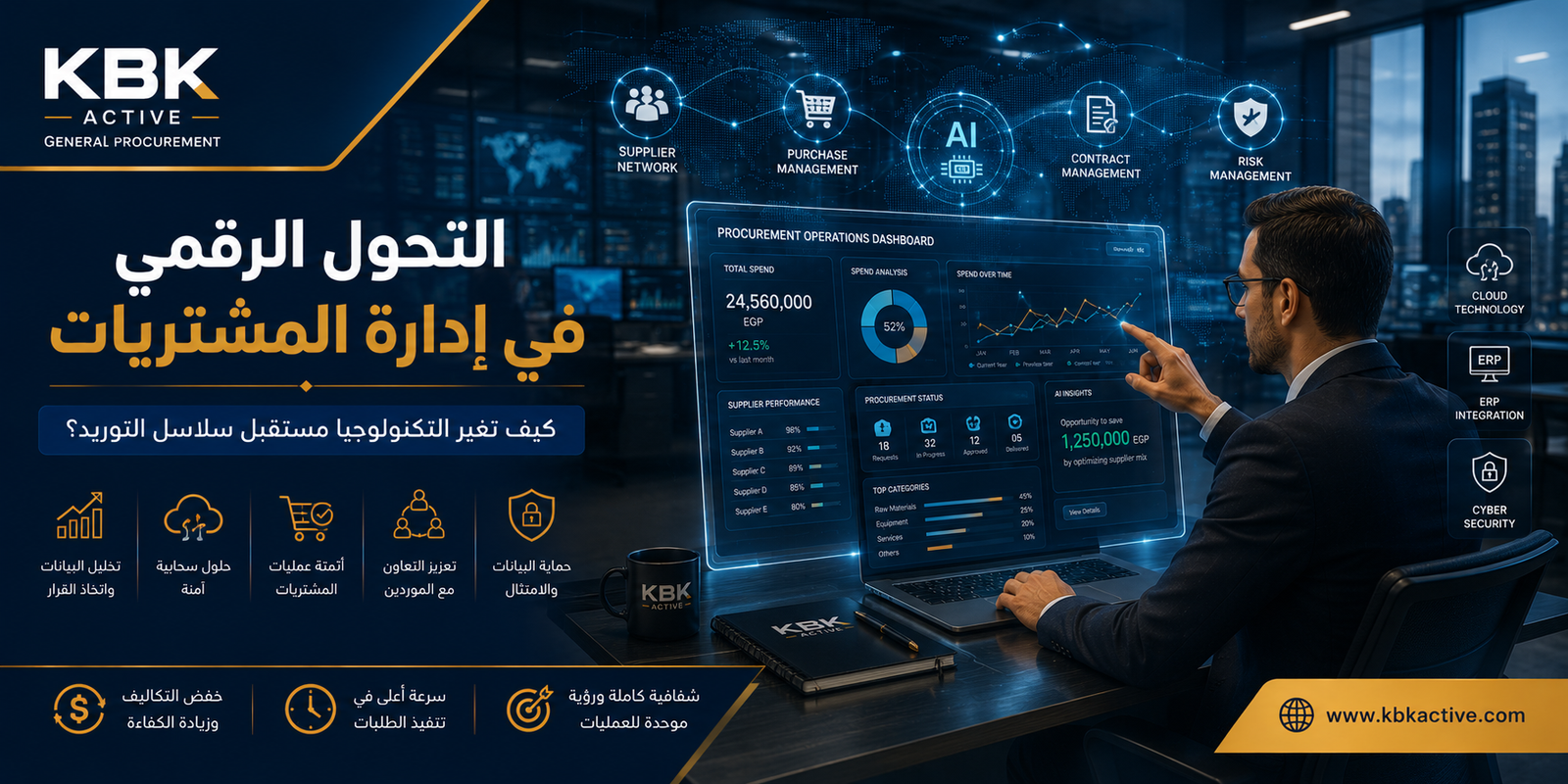
Digital Procurement Transformation
How Technology is Changing the Future of Supply Chains
The procurement sector is undergoing a radical transformation driven by rapid technological advances. Where purchasing processes once relied on paper files and traditional spreadsheets, organizations now depend on digital systems to manage the entire procurement cycle — from requisition to receiving products and performance analysis.
Digital transformation is not just about using new software; it represents a fundamental change in decision-making, data management, and supplier collaboration, aimed at increasing efficiency, reducing costs, and improving service quality.
What is Digital Procurement Transformation?
Digital transformation is the use of modern technologies to improve all stages of the procurement cycle, including: electronic purchase requisitions, RFQ management, digital supplier evaluation, contract tracking, inventory monitoring, data analysis and reporting, and integration with financial and ERP systems.
Why Digital Transformation is a Necessity
With increasing competition and rising operational costs, organizations need solutions that provide: speed in execution, higher data accuracy, reduced human errors, full procurement cycle transparency, improved internal controls, and data-driven decision making.
Key Technologies Used
1. ERP Systems
Connect procurement, inventory, accounting, and sales, providing a unified business view.
2. eProcurement Systems
Help create purchase requisitions, send RFQs, receive quotes, approve purchase orders, and track order status.
3. Artificial Intelligence
Used for demand forecasting, supplier price analysis, anomaly detection, and supplier recommendations.
4. Dashboards
Display real-time KPIs including procurement cycle time, spend volume, supplier performance, inventory value, and savings percentage.
5. Electronic Signatures
Accelerate contract and purchase order approval while maintaining documentation and compliance.
Benefits of Digital Transformation
Reduced procurement cycle time, improved team efficiency, better data accuracy, enhanced policy compliance, lower operational costs, improved supplier and customer experience, and support for growth and expansion.
Challenges of Digital Transformation
Organizations may face challenges such as resistance to change, the need for employee training, initial implementation costs, integration of legacy systems with modern solutions, and information security. These challenges can be overcome through phased planning and selecting appropriate solutions for the organization's nature.
Digital Transformation Success Indicators
Reduced purchase order cycle time, increased data accuracy, higher on-time delivery rates, fewer manual errors, and improved satisfaction of internal departments and suppliers.
How KBK Active Helps
KBK Active supports organizations in developing procurement processes by applying best practices, improving the purchasing cycle, managing suppliers, and preparing professional RFQs in line with modern digital transformation requirements.
Conclusion
Digital transformation in procurement is no longer optional — it is a fundamental element for enhancing competitiveness. Organizations that invest in digital systems, data analytics, and process automation are better equipped to control costs, improve performance, and make faster, more accurate decisions. Building an integrated digital procurement ecosystem is a strategic step toward a more efficient and sustainable future.
FAQ
Is digital transformation suitable for small businesses?
Yes, scalable solutions exist for organizations of all sizes.
What is the difference between ERP and eProcurement?
ERP is a comprehensive enterprise resource management system, while eProcurement focuses on purchasing processes and supplier management.
Does digital transformation reduce errors?
It significantly reduces errors from manual data entry and improves data accuracy.
Can digital transformation be implemented gradually?
Yes, phased implementation is the best approach to minimize risks and ensure project success.
Related Articles
- Learn more about tracking with digital tools
- Learn more about best procurement software options
- Learn more about cost optimization
Explore more procurement tools at KBK Active Tools Center.
Put This Knowledge Into Practice
Generate RFQs and evaluate suppliers in minutes with our free online tools
About KBK Active
This article was written by KBK Active, a leading enterprise procurement company in Egypt. With over 12 years of experience serving hotels, restaurants, hospitals, and government sectors, we bring deep expertise to every topic we cover.
Learn More About UsRelated Articles
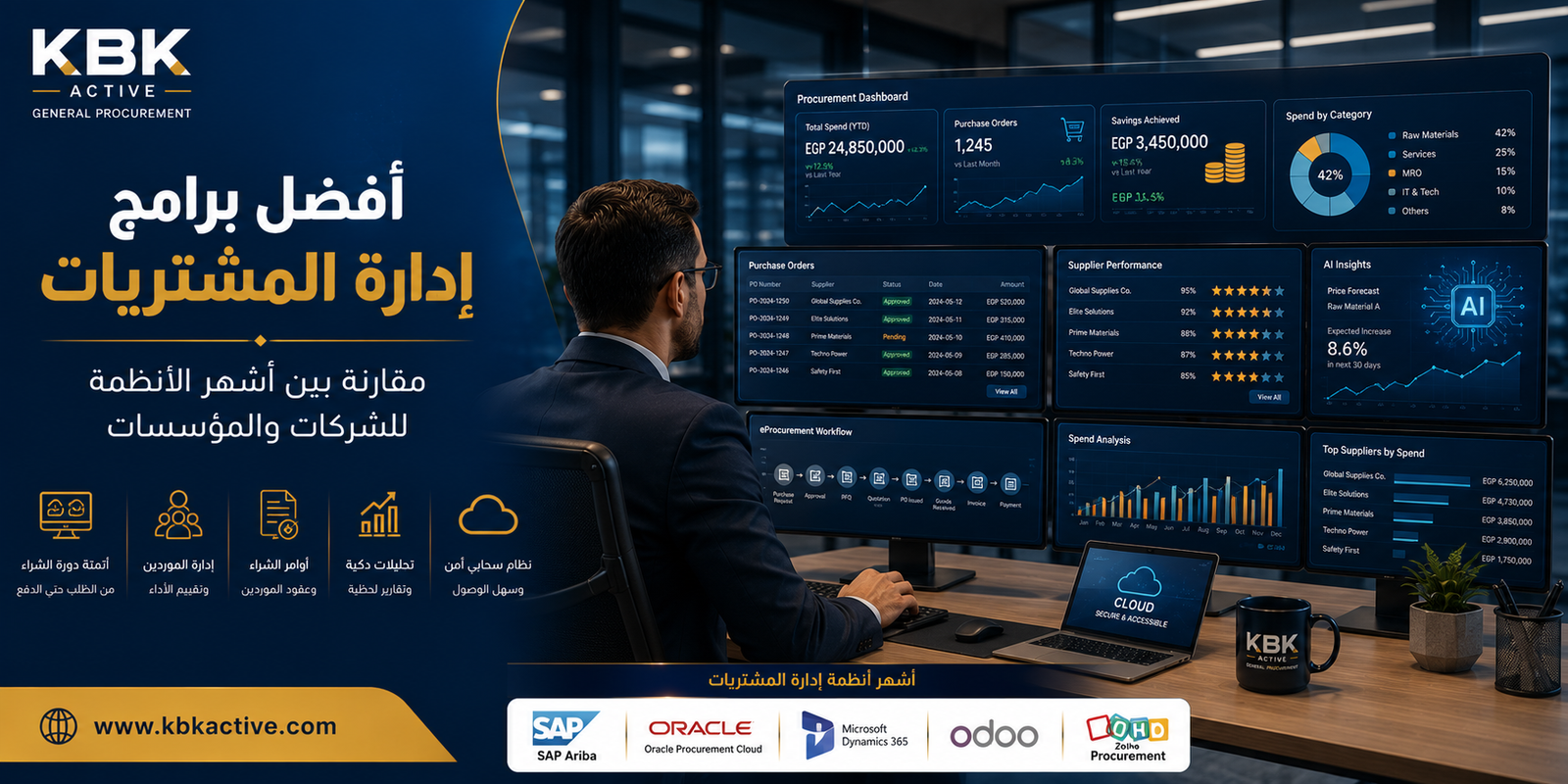
Best Procurement Software: A Comparison of the Most Popular Systems for Business
Learn about the best procurement software solutions, their features, and how to …
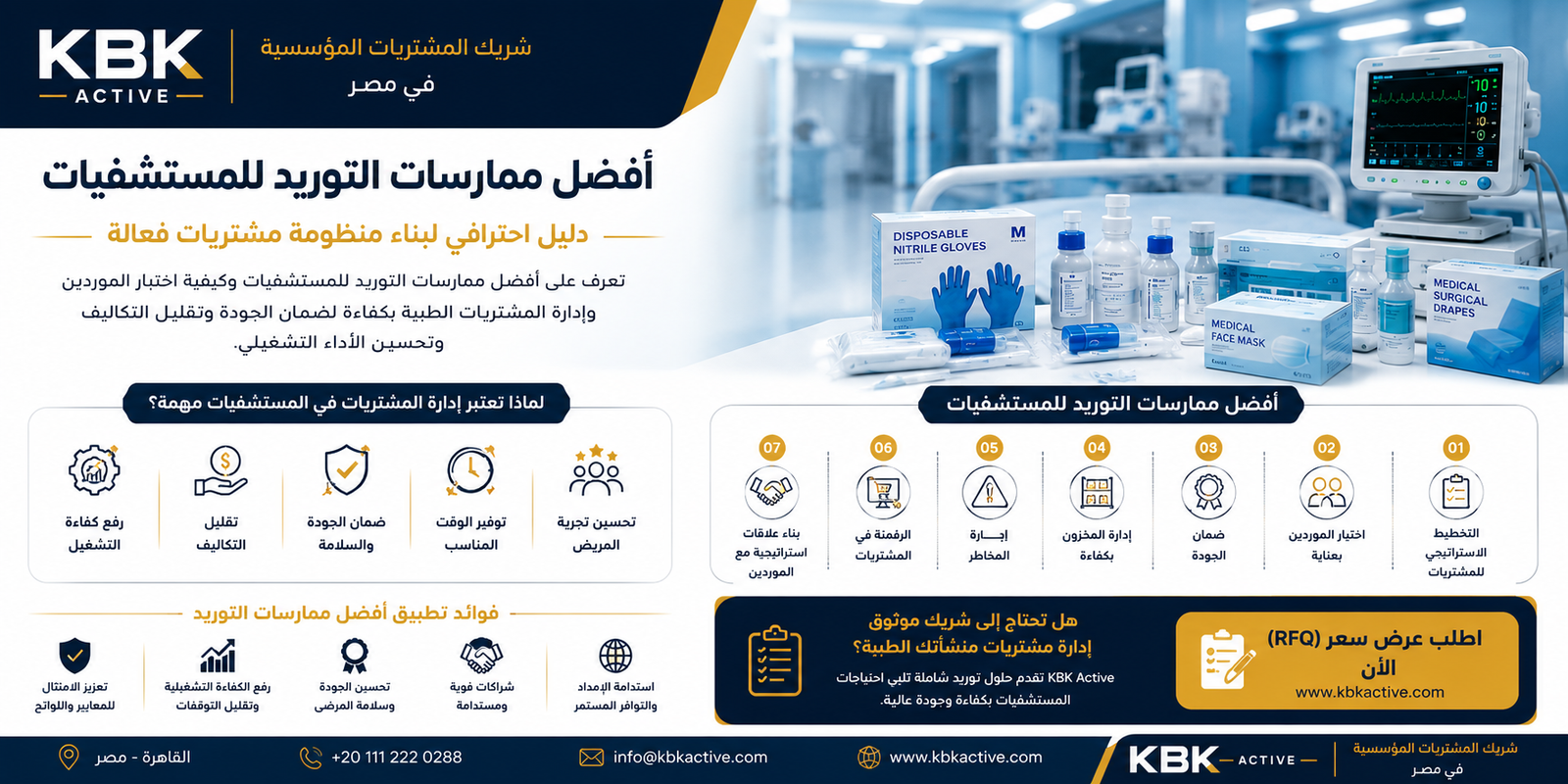
Hospital Procurement Best Practices: A Professional Guide to Medical Supply Mana
Learn the best practices for hospital procurement, how to choose suppliers, and …
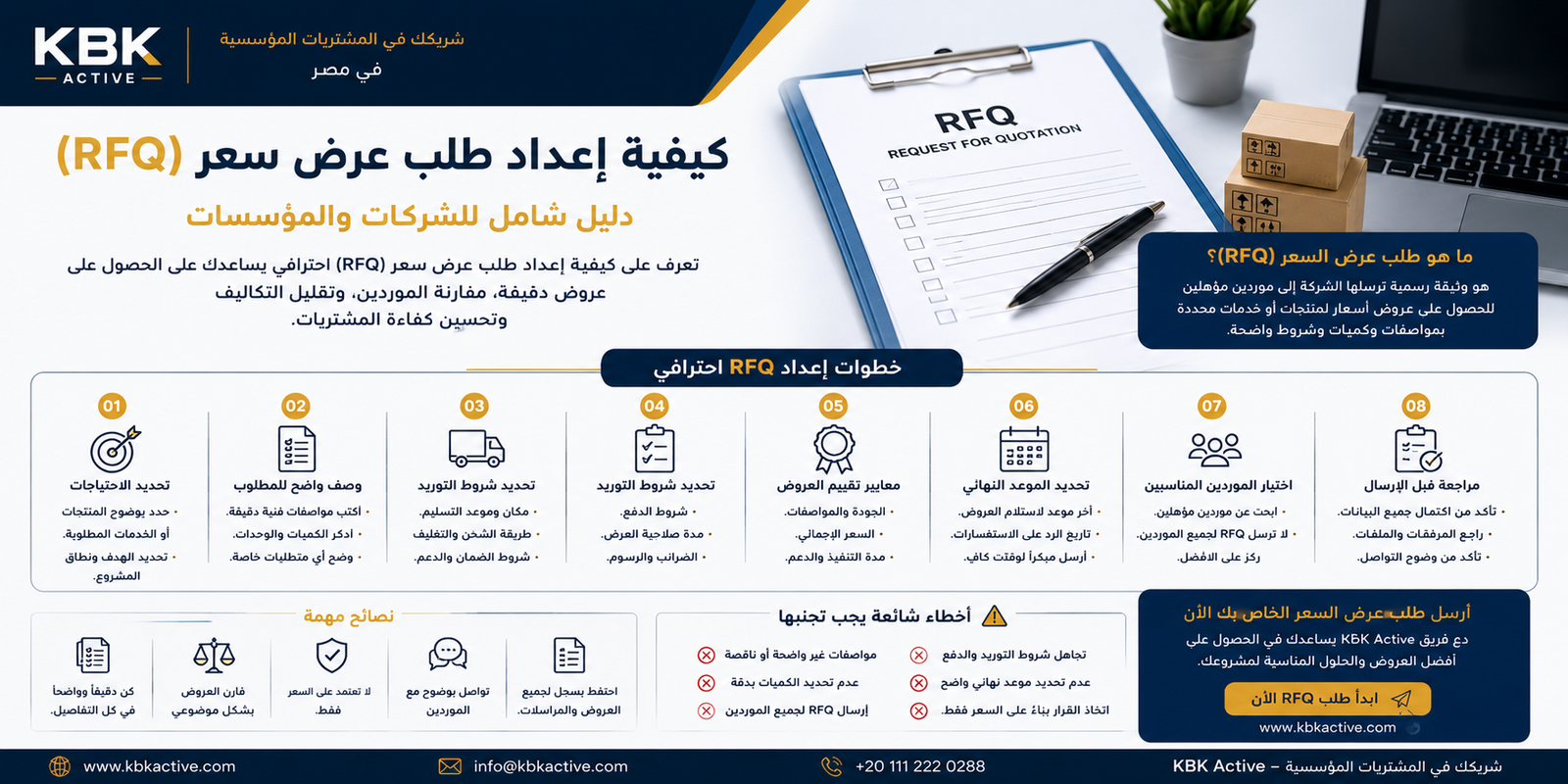
How to Write a Professional RFQ: A Complete Guide for Businesses
Learn how to write a professional Request for Quotation (RFQ) to get accurate bi…
Need expert help with Digital Procurement Transformation: How Technology is Changing the Future of Supply Chains? Our team is ready to assist.
KBK Active provides end-to-end procurement solutions for enterprises